7Stamp can replace Mifare and RFID plastic cards at self-service car washes, vending machines, and other unattended stations by turning an Apple Wallet or Google Wallet pass into a one-tap NFC primary identifier. With Apple VAS and Google Smart Tap, the same wallet card can identify the customer, show real-time balance sync, issue stamps, and keep retention messaging inside the phone wallet.
| Question | Answer |
|---|---|
| What changes? | The plastic card becomes a wallet pass saved in Apple Wallet and Google Wallet. |
| How does the station identify the customer? | The customer taps the phone on an NFC reader that supports Apple VAS or Google Smart Tap. |
| Which use cases fit? | Self-service car washes, vending machines, laundromats, kiosks, parking, lockers, and other unattended stations. |
| What stays synced? | Balance, stamps, rewards, and wallet push status can stay connected to the same customer pass. |
| Do customers need an app? | No. The card lives in Apple Wallet or Google Wallet. |
Why plastic cards became the weak link
Plastic loyalty and access cards have worked for years because they are simple. A customer receives a Mifare or RFID card, taps it at a reader, and the station recognizes the account. That is familiar, but it also creates a familiar set of problems: cards get lost, balances are harder to keep visible, and the business has little direct channel to reactivate the customer between visits.
For self-service businesses, this matters more than it does at a staffed counter. In a cafe, a team member can explain a loyalty program, scan a card, or solve a small issue. At a vending machine, car wash bay, kiosk, locker, or laundromat, the loyalty system has to work without a conversation.
That is where a wallet card is a better primary identifier. The customer already carries the phone, and the card can stay visible in a wallet they use every day.
Short definitions
- NFC is the short-range tap technology used when a phone or card communicates with a nearby reader.
- Mifare is a common family of contactless plastic cards used for access, stored value, and self-service systems.
- RFID is a broader term for radio-based identification, including many plastic card systems.
- Apple VAS lets compatible terminals read supported Apple Wallet passes for value-added services.
- Google Smart Tap lets compatible terminals read supported Google Wallet passes for loyalty, offers, and similar use cases.
- Primary identifier means the wallet pass becomes the main customer ID used by the station or reader.
What the customer experience looks like
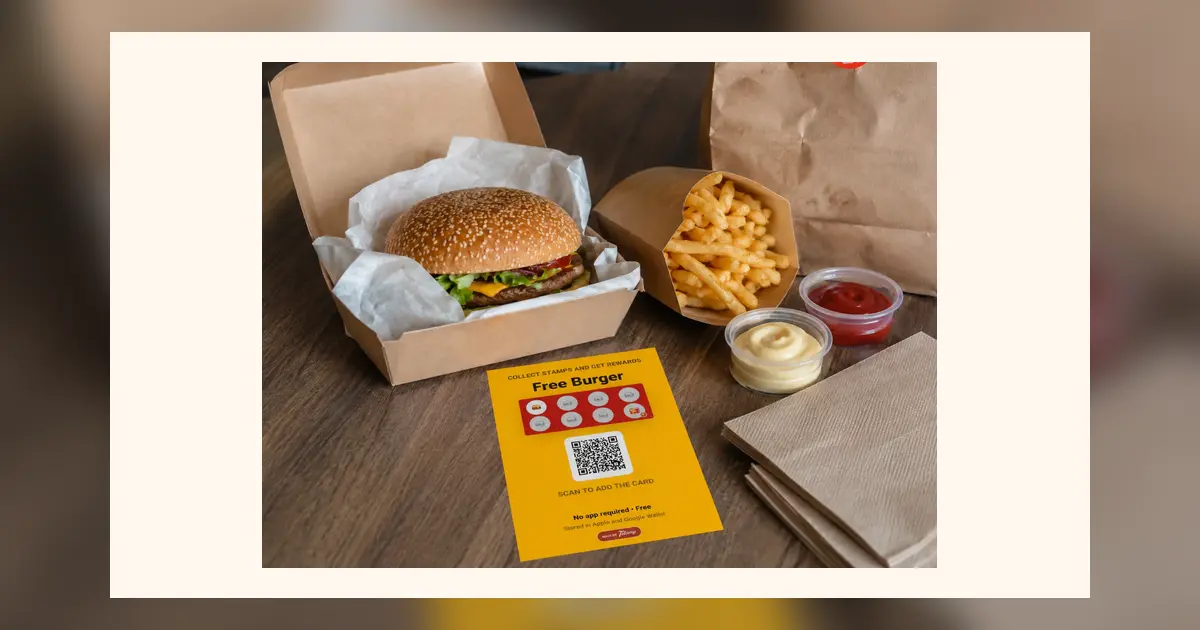
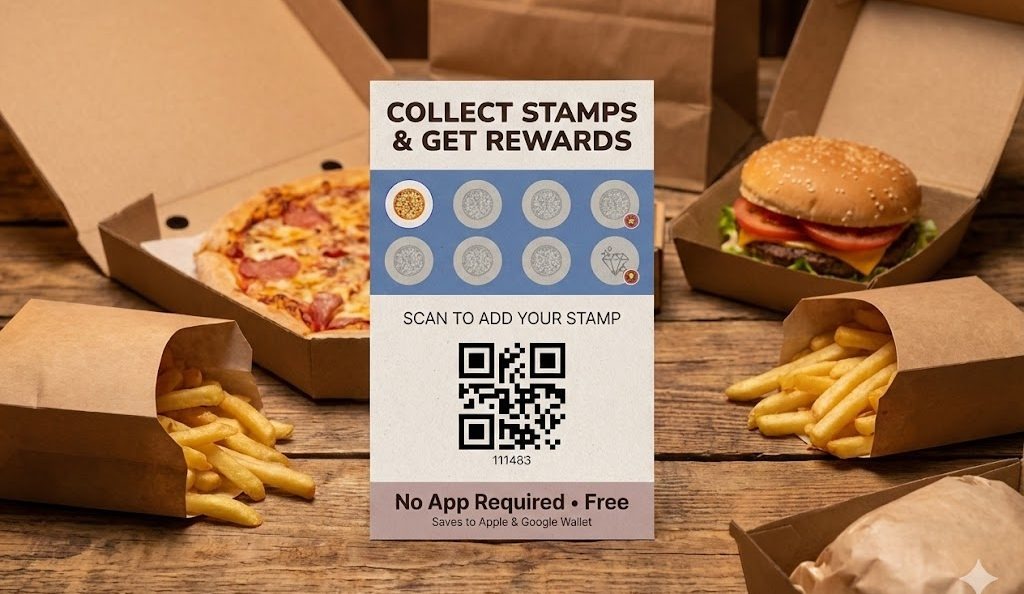
- The customer scans a QR code or opens a link.
- They save the branded 7Stamp card to Apple Wallet or Google Wallet.
- At the station, they tap the phone on the NFC reader.
- The reader identifies the pass and connects the customer to the correct account, balance, stamps, or reward flow.
In the best case, this feels like a normal tap. No app install, no login at the machine, no paper ticket, and no plastic card to remember.
What this unlocks for self-service businesses
1. The wallet card can replace the plastic card
For many self-service flows, the key change is not only digital loyalty. It is digital identification. The same card that the customer sees in Apple Wallet or Google Wallet can become the identifier that the station reads through NFC.
That means the business can reduce dependence on physical Mifare or RFID cards and move the customer relationship into a channel that is easier to update, message, and keep visible.
2. Balance and stamps can live on the same card
A plastic card can identify an account, but it usually does not tell the customer much unless they go to a terminal or separate interface. A wallet card can show progress, status, balance context, rewards, and relevant messages in a familiar place.
That is especially useful when the same customer flow includes prepaid balance, visit stamps, Smart Vouchers, or return-visit campaigns.
3. Retention does not stop at the machine
Unattended stations often struggle with customer return behavior. The customer may use the machine once, then disappear. With 7Stamp, the wallet pass can support push notifications, email campaigns, birthday rewards, win-back messages, and nearby reminders after the customer leaves the site.
That creates a direct retention layer on top of the self-service transaction.
Where this fits best
This model is especially relevant for businesses where customers need quick identification and the team cannot manually validate every visit:
- Self-service car washes and express wash bays.
- Vending machines and micro-markets.
- Laundromats and unattended laundry rooms.
- Parking, lockers, and access-based stations.
- Self-service kiosks in food, retail, or services.
- Any station where the customer already taps a card, code, or phone.
For self-service car washes, this can be especially powerful because customers already understand repeat-use habits: wash balance, prepaid packages, free wash rewards, and visit-based incentives.
How 7Stamp fits the rollout
7Stamp is designed to start simple and grow into deeper automation only when the business needs it.
A business can launch a wallet loyalty card first, then choose the operational workflow that matches the site:
- Self-Service Kiosk for customer-led scanning and reward actions.
- Autopilot Mode for faster queues and scanner-based validation.
- Zero Level Integration when loyalty should work before a POS or hardware project is ready.
- API, webhook, Apple VAS, Google Smart Tap, or POS integration when the station needs a direct automated loop.
This matters because not every location should start with a heavy integration. Some teams first need to prove that customers save the card, return, and respond to rewards. That is the logic behind Zero Level Integration: launch the loyalty loop first, then automate the parts that have proven operational value.
How to move from plastic to wallet ID
- Map the current identifier. List where the existing Mifare or RFID card is used: reader, vending controller, car wash system, balance database, POS, kiosk, or access layer.
- Create the wallet pass. Build the branded 7Stamp card and define what the customer should see: balance, stamps, reward status, or the next action.
- Connect the reader flow. Use compatible NFC hardware and integration logic so Apple VAS or Google Smart Tap can identify the wallet pass at the station.
- Layer retention on top. Add wallet push, birthday rewards, win-back campaigns, and nearby reminders once the identification flow is stable.
Does this replace every plastic card immediately?
Not always. Some businesses will run plastic cards and wallet cards in parallel during the transition. That can be the right approach when existing customers already have balances on old cards, or when hardware is upgraded location by location.
The important part is choosing a path where the wallet card becomes the preferred customer-facing identity over time. The more value the card shows directly in Apple Wallet or Google Wallet, the less reason customers have to keep relying on plastic.
What about existing NFC hardware?
Existing NFC hardware may be reusable, but it depends on the reader, controller, software, and whether it supports the wallet technologies needed for the target flow. Apple VAS and Google Smart Tap require compatible hardware and configuration. If the existing reader only supports a closed Mifare flow, the business may need middleware, firmware changes, or a reader upgrade.
That is why the first step is not buying new hardware. The first step is mapping the current identifier and deciding what the wallet pass should control.
Why this matters for customer data
A plastic card can be anonymous or hard to reconnect to a communication channel. A wallet pass can become part of a direct retention system. The customer does not need to install an app, but the business can still keep a persistent card, send relevant wallet updates, and measure repeat behavior more clearly.
For unattended businesses, that is the difference between a machine transaction and an owned customer relationship.
The practical takeaway
Plastic cards solved the first version of self-service identification. Wallet cards solve the next one: one-tap identification, visible status, real-time loyalty, and direct retention without asking the customer to download an app.
If your business already uses Mifare, RFID, or NFC cards, the next question is not whether the plastic works. It is whether the same customer identity can work harder inside the phone the customer already carries.
You can start with the free forever plan or create a test card in about 15 seconds.